What to Look for in a Warehouse or Distribution Center Roofing Contract
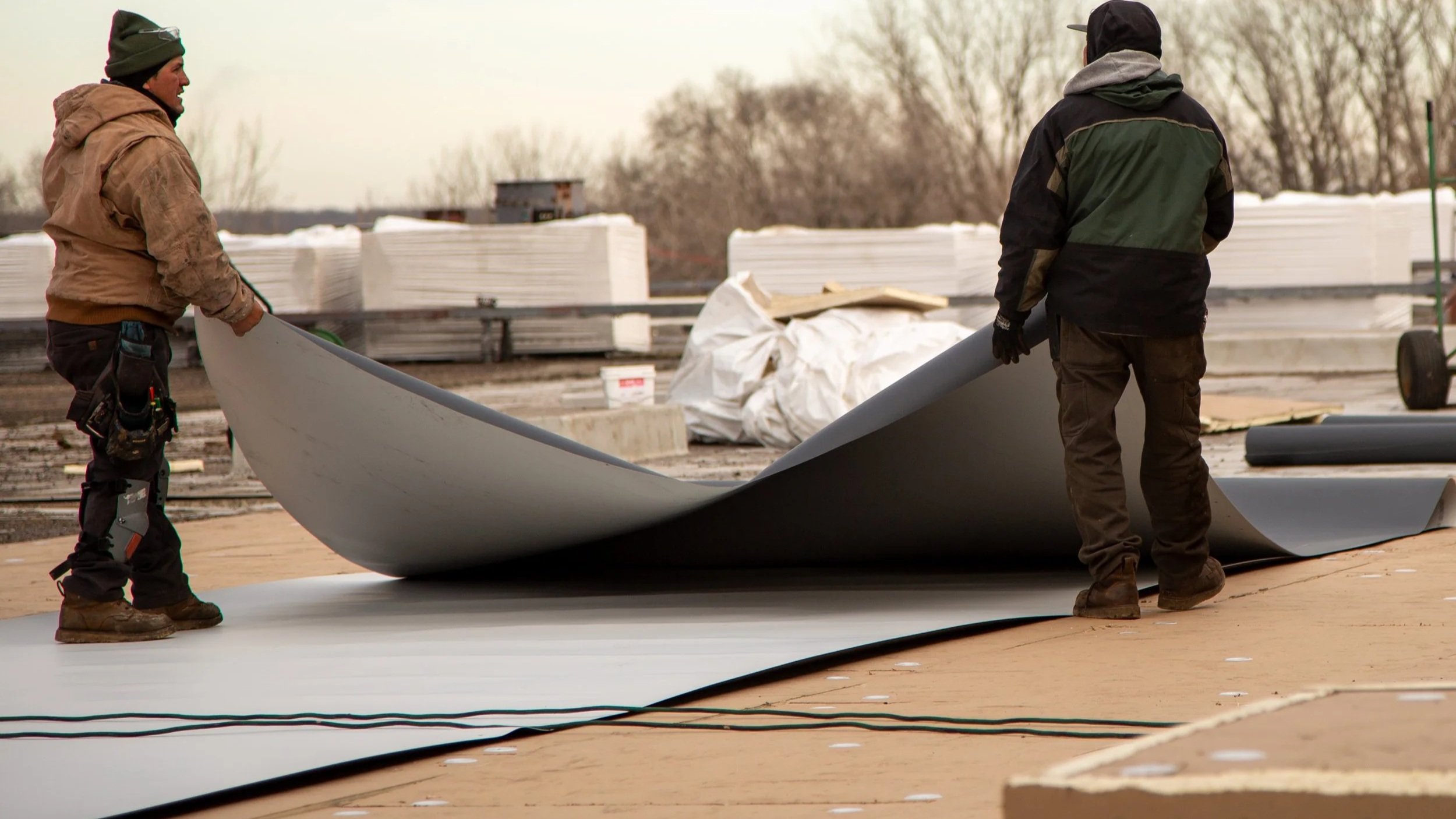
Warehouse and distribution center roofs come with their own set of challenges: massive square footage, operations that often run around the clock, and a building where downtime translates directly into missed shipments and lost revenue. A contract that works fine for a small office building leaves real gaps when it's applied to a 200,000 square foot distribution center, and I've seen that gap cause real problems.
Here's what I make sure is in writing before anyone signs anything.
Square footage changes the math on everything
A roof this size means material logistics, crew size, and scheduling all operate at a different scale. I spell out exactly how the project will be phased across the roof, since a building this large is rarely done as a single continuous tear-off. Phasing protects the building from sitting fully exposed to weather at any point, and a clear plan in writing prevents confusion about which sections are under active construction at any given time.
Operations rarely stop for roof work
Most distribution centers can't pause receiving and shipping for a roof project, and I don't expect them to. I address up front how my crew will work around active loading dock operations, forklift traffic, and racking below the roof deck, including how we protect product from dust, debris, and any water exposure during the work, especially in sections storing temperature-sensitive or moisture-sensitive inventory.
Rooftop equipment load and access
Large industrial buildings often carry significant rooftop equipment, HVAC units, exhaust fans, sprinkler components, sometimes solar arrays. I document exactly which equipment exists, how it'll be protected or temporarily relocated, and who's responsible if anything gets damaged during the work. I've seen this turn into a dispute on other jobs when it wasn't spelled out ahead of time, and I'd rather avoid that entirely.
Fire and life safety systems
Warehouses often have rooftop fire suppression components, and any roofing work near these systems needs coordination with the fire protection contractor so nobody accidentally disables a sprinkler line or smoke vent during construction. I specify exactly how these systems get protected and tested before, during, and after the project.
Warranty terms that match how the building's actually used
A distribution center roof takes more wear from rooftop traffic, equipment vibration, and heavy HVAC cycling than a typical office roof. I make sure the manufacturer warranty terms are clear, including what voids it, because heavy industrial use can affect warranty coverage if the system wasn't specified correctly for that level of use in the first place.
Insurance and liability for a high-value building
Given the value of inventory typically stored in a distribution center, I make sure the contract clearly states my liability coverage and what happens if water intrusion damages product during the project. I'd encourage you to confirm that directly with the insurance provider too, not just take any contractor's word for it.
What this means before you sign anything
A warehouse roofing contract should read like it was written for a building this size, not adapted from a template meant for something much smaller. I work with warehouse and distribution center clients across Iowa and the Midwest and build contracts and phasing plans around how the facility actually operates. Call me at (641) 629-1451 or visit encorroofing.com for a free assessment before your next roof project goes out to bid.