Why Hospitals and Healthcare Facilities Can't Treat Roofing Like a Routine Repair
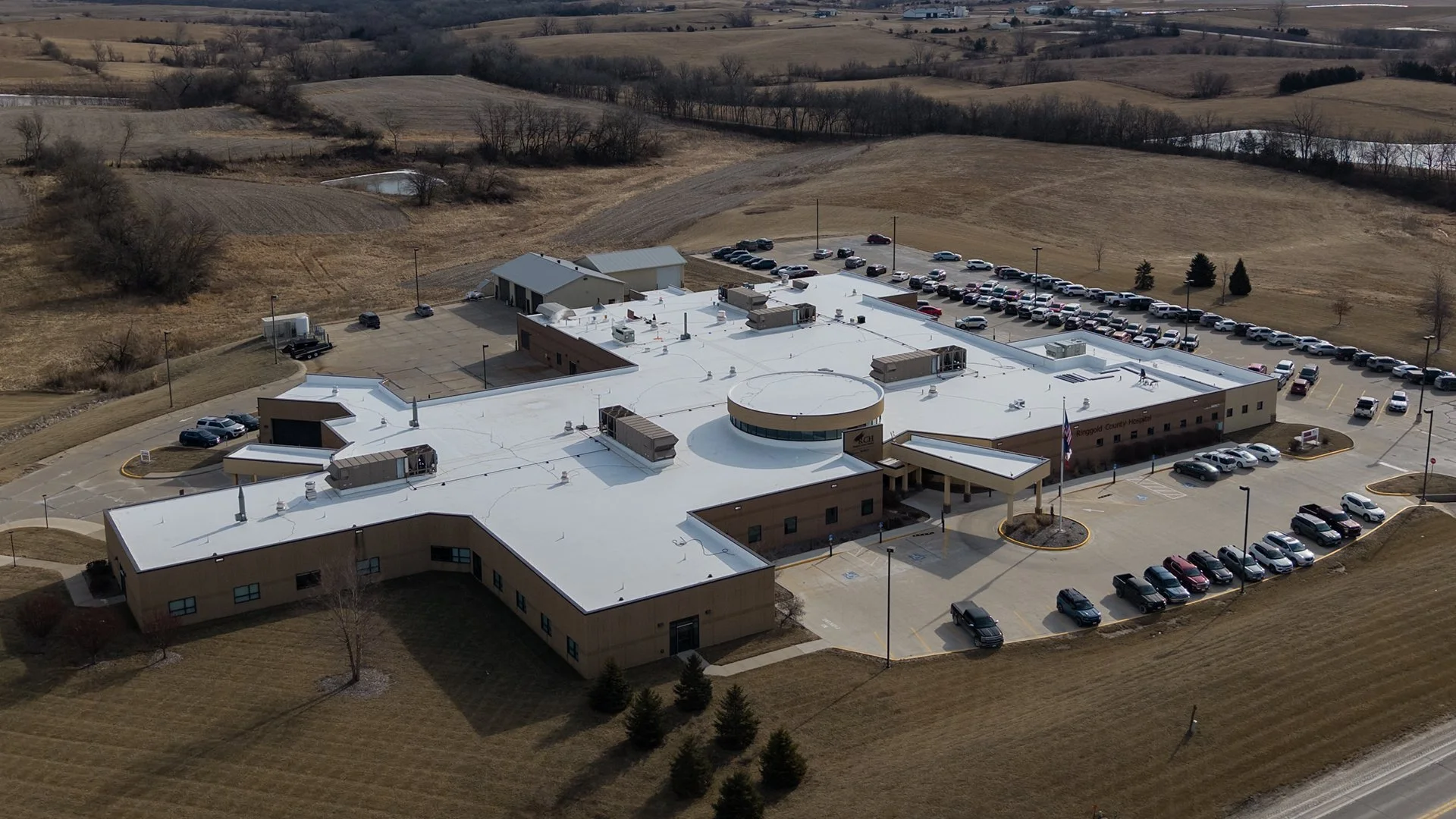
I've worked with healthcare facilities across Iowa and understand what's at stake when the building involved is one where people are actively receiving care.
A roof leak in most commercial buildings means a bucket, a work order, and an inconvenience. In a hospital, that same leak can mean a closed operating room, a compromised sterile environment, or equipment that can't get wet without becoming a six-figure replacement on its own. I take that difference seriously, and I think every contractor working on a healthcare facility should.
There's no good time to shut down a section of a hospital
Unlike a retail building or an office, a hospital can't just close a wing for a few weeks while roof work happens. Patient care doesn't pause for construction. That means I build detailed phasing plans that keep critical departments fully operational and protected the whole way through the project, not just a general promise that we'll be careful.
Infection control changes how I approach the work
Roof work generates dust and debris, and on most buildings that's a minor nuisance. In a hospital, airborne particles near air intakes or compromised negative-pressure rooms can become an infection control issue. I make sure I understand interim life safety measures, proper containment, and how to coordinate with the facility's infection control team before any work begins, not after a problem comes up.
Rooftop equipment is often life-critical
Hospital roofs carry HVAC systems tied to operating room air handling, medical gas exhaust, and emergency generator components. Any roofing project that disturbs or affects this equipment needs careful coordination with facilities engineering, because downtime on the wrong system isn't just inconvenient. It can affect patient safety directly, and that's not something I take lightly.
Documentation and compliance matter more here
Healthcare facilities deal with oversight from accreditation bodies and regulatory inspections that most commercial buildings never see. I expect to provide detailed documentation, safety data sheets, and proof of proper credentials and insurance on every hospital project, since this paperwork often becomes part of the facility's own compliance record.
Why a slower, careful timeline is the right one
It's tempting to want a hospital roof project finished as fast as possible to minimize disruption. In my experience, rushing a project on a building this sensitive increases risk. The right pace is the one that allows for proper phasing, containment, and coordination with your staff, even if that means the calendar runs a little longer than it would on a warehouse roof of the same size.
What I think you should look for in a contractor
Experience on healthcare projects specifically, a clear infection control and containment plan before work starts, and a willingness to work around your facility's schedule instead of asking you to work around mine. Those are the things that separate a contractor who's actually done hospital work before from one who's guessing.
A roofing partner who understands the stakes
I've worked with healthcare facilities across Iowa and understand what's at stake when the building involved is one where people are actively receiving care. If your facility needs a roof assessment that accounts for the realities of running a hospital, contact me or visit encorroofing.com.