TPO vs. EPDM: Which Commercial Roofing System Fits Your Building
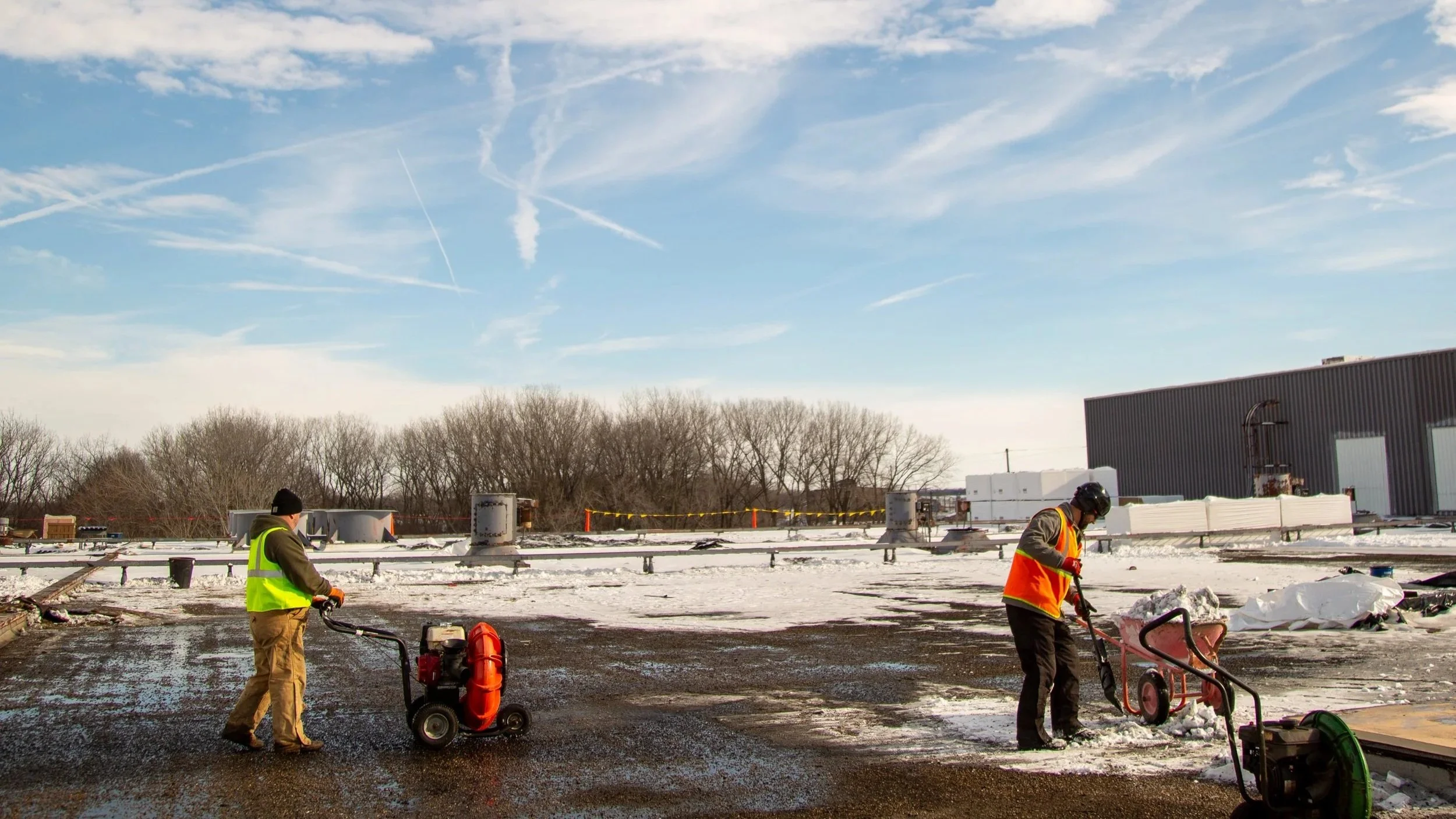
I get this question almost every week, usually from someone who's already gotten two quotes that recommend two different systems and can't figure out who's right. The honest answer is that both materials are good. The right one depends on your building, not on which one a salesman happens to push.
Let me walk you through what I actually weigh when I'm standing on a roof trying to make this call.
What TPO is
TPO stands for thermoplastic polyolefin. It's a white or light-colored membrane, and the seams get heat-welded, which makes them stronger than seams that are just glued or taped. That reflective surface also helps with cooling costs in the summer, which is a big part of why TPO has become the system I install most often over the last fifteen years or so.
What EPDM is
EPDM is a synthetic rubber membrane, almost always black, and it's been around since the 1960s. It's flexible, it handles big temperature swings well, and it's got the longest track record of any single-ply system out there. Seams are usually adhered with tape or liquid adhesive instead of welded, which means seam quality leans more on the skill of the crew installing it and the weather on the day they're doing it.
Where I lean toward TPO
If your building has rooftop HVAC units, kitchen exhaust, or any kind of grease and oil exposure, I usually steer toward TPO. It holds up better against punctures and chemicals in my experience. The reflective surface also matters more on a building with a lot of roof area sitting in direct sun, like a warehouse or manufacturing facility, where a cooler roof surface takes some of the strain off the HVAC system underneath.
Where I lean toward EPDM
EPDM has a longer history of performing well through extreme temperature swings, and that matters in Iowa, where a roof goes from well below zero to well above ninety within the same year. I've also found it's a more forgiving material to repair down the road. Patching black rubber membrane years later is a more straightforward job than re-welding TPO seams that have aged.
Cost and how long either one actually lasts
Material costs for TPO and EPDM usually land in a similar range, with the real gap coming from membrane thickness and the manufacturer you go with, not the material itself. Both systems, installed right and maintained, commonly carry warranties in the 20 to 30 year range. In my experience, how long a roof actually lasts comes down to installation quality and maintenance far more than which membrane it is.
The question I actually ask before recommending either one
It's never "which membrane is better." It's "what is this building dealing with." A manufacturing facility with rooftop exhaust and people walking up there constantly for maintenance is a different conversation than a clean warehouse roof with almost no penetrations. What's already up there, how the building gets used, and our climate all factor into the right call for that specific roof.
Getting a straight answer for your roof
I work with TPO, EPDM, and metal roofing across Iowa and the Midwest, and the Roof SAVERS™ Method is built to walk you through more than one real option before anything gets decided. If you want a straight answer on which system actually fits your building, call me at (641) 629-1451 or visit encorroofing.com for a free assessment.