Metal Roofing for Iowa Manufacturing and Industrial Buildings
A manufacturing plant puts different demands on a roof than an office building does, and I've seen the difference firsthand on enough projects to feel strongly about it. Heat from production equipment, vibration, heavier rooftop loads, and the expectation that this roof needs to last a long time all factor into how I approach these buildings. Metal roofing handles several of those demands better than membrane systems, which is why I end up recommending it so often for industrial work.
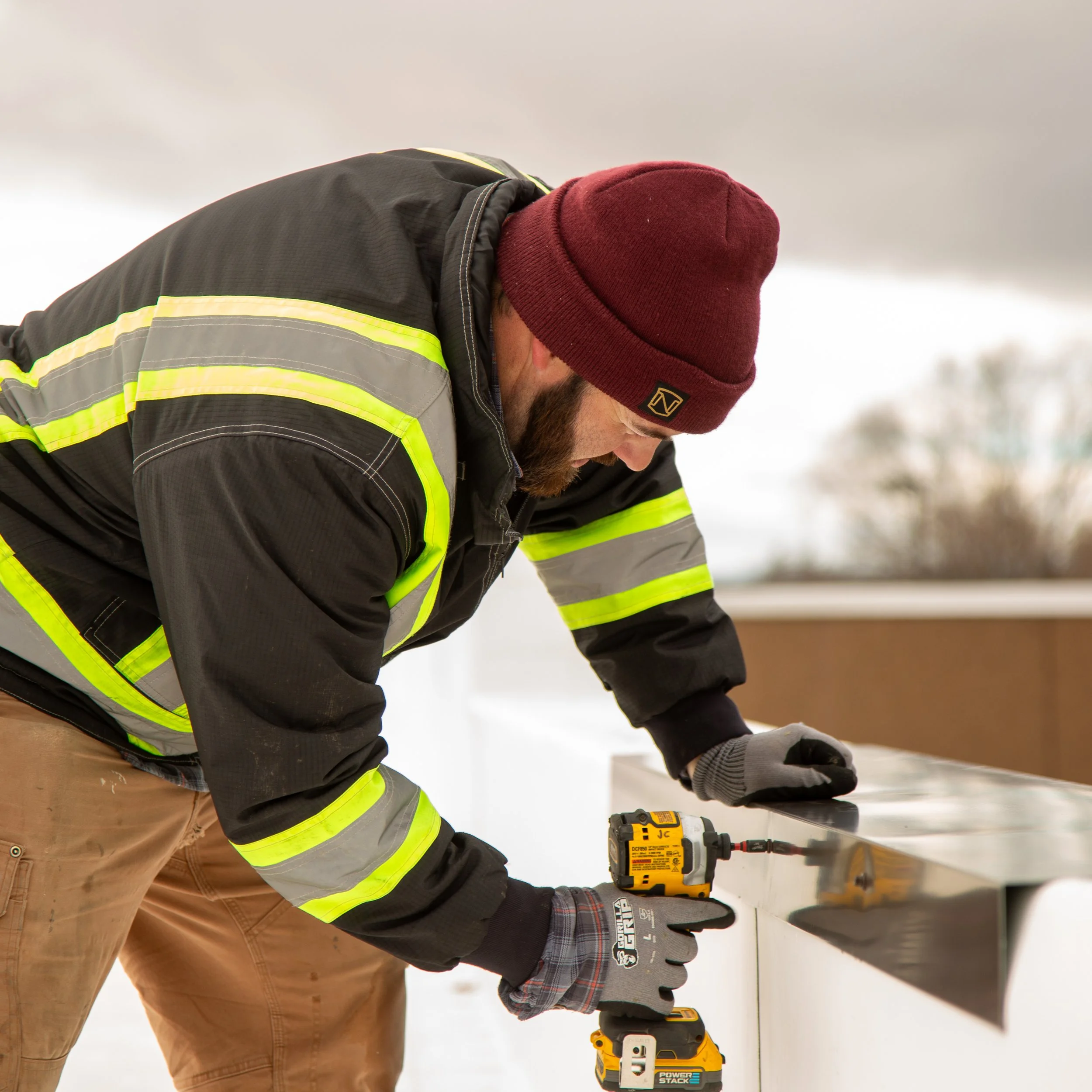
Metal roofing handles several of those demands better than membrane systems, which is why I end up recommending it so often for industrial work.
Standing seam versus exposed fastener systems
There are two common approaches here. Standing seam panels use a hidden clip system with nothing exposed on the panel face, so there's no fastener sitting there for years slowly working loose or rusting through. Exposed fastener systems cost less going in, but they rely on screws driven through the panel, which eventually need re-tightening or replacing as the gaskets age. For a facility I expect to serve for decades, I usually steer toward standing seam.
Metal retrofit over an existing low-slope roof
Not every project needs a full tear-off. A metal retrofit system can go over an aging low-slope membrane, using a structural framework that builds a sloped metal roof above the old one. I like this option because it avoids the disruption of tearing everything off, adds insulation value, and gives a building a roof with a much longer realistic life, often 40 years or more, without shutting down operations to get there.
Why manufacturing facilities lean toward metal
Production floors generate heat, and the rooftop equipment on a manufacturing building tends to be heavier and serviced more often than on a typical office building. Metal holds up better under foot traffic and equipment vibration over time than single-ply membranes do, in my experience. It also sheds snow and ice more effectively, which matters on buildings with big, uninterrupted roof spans where snow load is a real structural concern, not just an inconvenience.
Energy and maintenance, in practice
A reflective metal roof, paired with proper insulation, can meaningfully cut cooling loads in a large facility during an Iowa summer. Maintenance tends to focus on fastener checks, sealant inspection at seams and penetrations, and keeping drainage clear, instead of the membrane-specific concerns I deal with on TPO or EPDM roofs.
What it costs compared to membrane systems
Metal generally costs more upfront than a TPO or EPDM job of the same size. The trade-off is service life. A well-installed standing seam roof can outlast a membrane system by a decade or more, and once you factor in that the membrane roof will need replacing again before the metal one does, the long-term math often favors metal.
Getting the right system for your facility
Not every industrial building needs metal, and not every metal system is built the same. The right call depends on the existing roof, the building's structural capacity, and what your facility actually needs over the next twenty to forty years. I work with manufacturing and industrial facilities across Iowa and the Midwest on both metal retrofit and new metal installations. Call me at (641) 629-1451 or visit encorroofing.com for a free assessment of what your building actually needs.