How Iowa Winters Wear Down a Commercial Roof
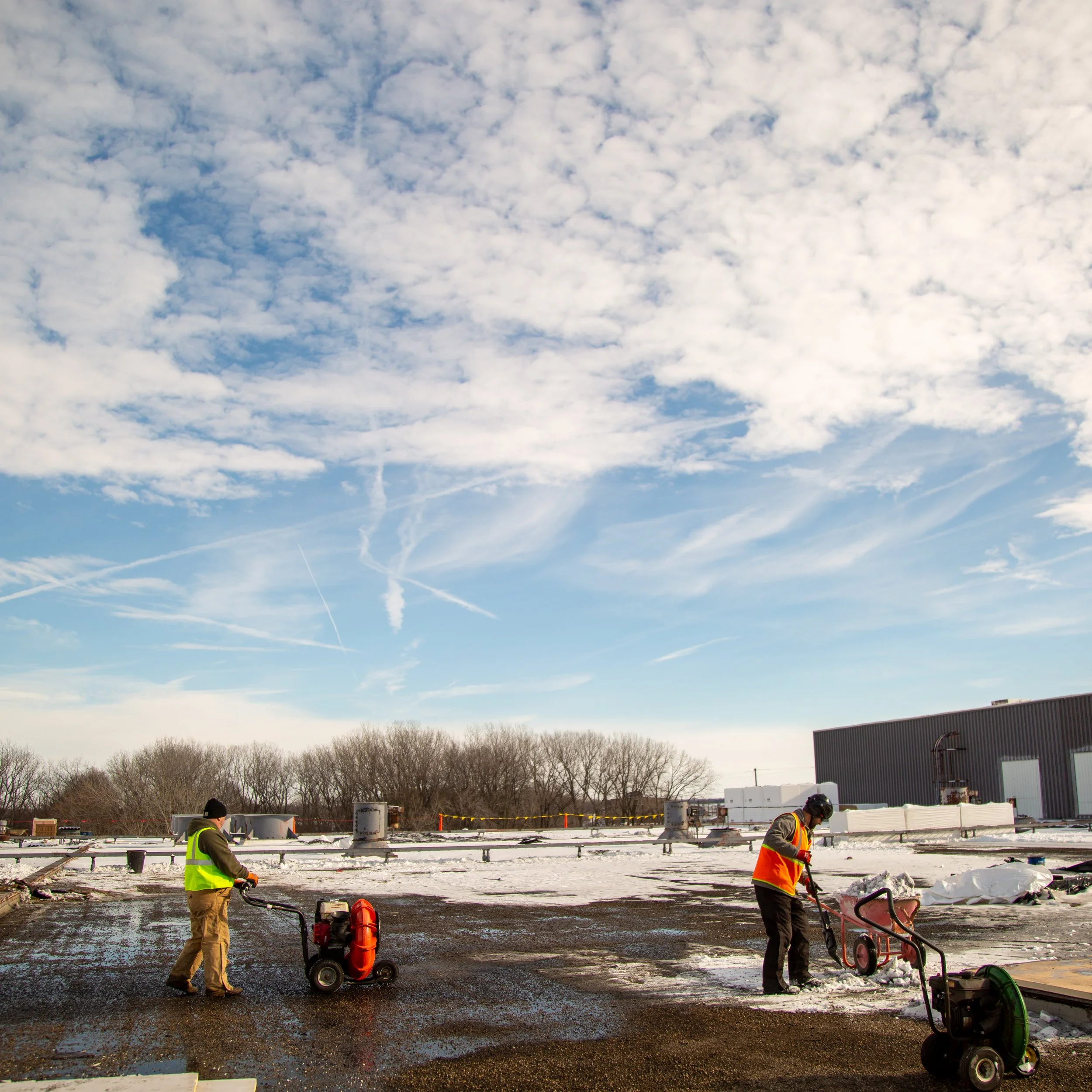
A commercial roof here works harder than the same roof would somewhere milder.
I've lived and worked in Iowa my whole career, and I can tell you a commercial roof here works harder than the same roof would somewhere milder. The temperature swings, the freeze-thaw cycles, the snow load, the ice, it all adds up over a season. Most of the damage doesn't show up until spring, which is exactly why I push so hard for a fall inspection here.
Freeze-thaw cycling stresses everything differently
A roof membrane expands and contracts with temperature, and our winters put it through that cycle constantly. A single week in January can swing from below zero to above freezing and back again. Materials that flex fine in a moderate climate can go brittle in extreme cold, which is exactly why I pay so much attention to seam integrity and flashing condition heading into winter. A seam that's held up all summer can crack under a hard cold snap if it was already weakened.
Snow load is a real structural number, not just a look
Iowa building codes account for snow load in roof design, but accumulated snow that drifts against a parapet wall or piles up near rooftop equipment can exceed what the roof was designed for in certain spots. Flat and low-slope roofs are particularly prone to this kind of drifting, since wind pushes snow around mechanical units, screen walls, and roof edges in ways that create uneven loads I always want eyes on.
Ice dams happen on commercial roofs too
People usually only think about ice dams on houses, but I see them on commercial buildings with parapet walls or roof edges, where melting snow refreezes before it can drain. That refrozen ice can back water up under the membrane at the edge, and that's one of the more common sources of winter leaks that don't show up until everything thaws in the spring.
Why spring is when I find most winter damage
Snow and ice hide a lot. A cracked flashing seal or a developing membrane issue can sit there unnoticed under a foot of snow for weeks. It's only once everything melts that the water finds its way in, which is why I see a real jump in roof calls every March and April, well after the actual damage happened.
What this means for when you call me
A roof that gets a real inspection in October, before the first hard freeze, has a much better shot at making it through winter without a surprise. Checking flashing, clearing drains, and confirming everything is sealed at every penetration before the cold sets in catches problems while they're still cheap to fix.
Getting ahead of the season
I've worked through enough Iowa winters to know exactly which parts of a roof take the hardest hit, and where to look first when spring thaw reveals a problem. If your roof hasn't been inspected since before last winter, now's the time. Call me at (641) 629-1451 or visit encorroofing.com for a free assessment before the next freeze sets in.