How Long Does a Commercial Roof Replacement Actually Take?
How Long Does a Commercial Roof Replacement Actually Take?
This is usually the first question I get asked on a walkthrough, and I understand why. You're not just curious. You're trying to plan around it. So let me give you a real answer instead of a number I'd have to walk back later.
The short answer
A straightforward replacement on a low-slope commercial roof, somewhere in the 20,000 to 50,000 square foot range, typically takes me one to three weeks once my crew is actively on site. Smaller buildings move faster. Bigger facilities, complicated rooflines, or roofs with a lot of equipment to work around can stretch into several weeks.
What happens before my crew ever shows up
This is the part most building owners don't expect. Between the inspection, the proposal, ordering materials, and getting on the schedule, it's common to wait four to eight weeks before tear-off even starts. Material lead times have gotten better since the supply chain headaches a few years back, but certain membrane types and insulation thicknesses still take longer to get than others.
Tear-off and what's underneath
Once the old roof comes off, I check the deck. If there's rotted wood, rusted metal, or insulation that's been holding water, that gets replaced before anything new goes down. This is also where surprises show up. A roof that looked fine during the inspection can reveal deck damage once we pull the old membrane back, especially around old penetrations or spots that have been leaking quietly for years without anyone noticing from inside.
Installation
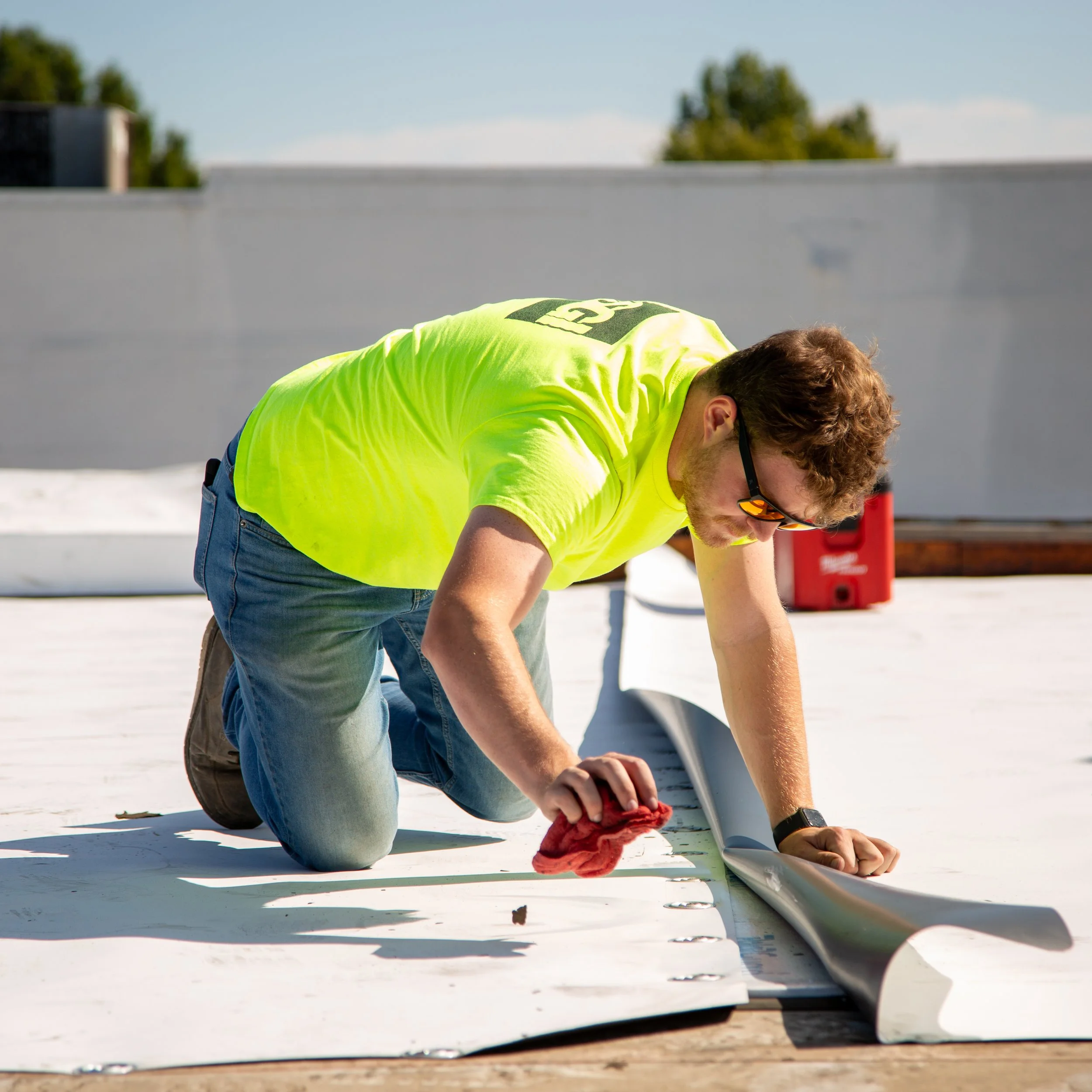
This is the part that moves fastest on a well-run job. Insulation goes down first, then the membrane, then flashing and detail work around penetrations, parapets, and edges. Weather is the biggest wildcard here. Wind, rain, and hard cold all slow or stop installation, which is a big part of why most of my work in Iowa happens between April and October.
Final inspection and closeout
A manufacturer-backed warranty usually requires a final inspection before it's issued, sometimes by the manufacturer's own rep, sometimes by a contractor certified to sign off on it. That step confirms everything was installed to spec and gets your warranty paperwork moving.
What actually slows a project down
Three things cause more delays than anything else, in my experience: deck damage we find after tear-off, weather during installation, and rooftop equipment that has to be moved or worked around. A contractor who's done this enough times will tell you about these risks in the proposal up front, not after they happen.
Building the schedule around your building
For a school, that usually means summer. For a hospital, it means phasing the work so patient areas never sit fully exposed. For a manufacturing plant, it means working around your production schedule instead of asking you to shut a line down for me. I ask about all of this before I ever propose a timeline, because a schedule that ignores how your building actually runs isn't a real schedule.
If you want a real timeline instead of a guess, the only way to get one is a site visit. I offer free commercial roof assessments across Iowa and the Midwest, with a written scope and timeline you can actually plan around. Call me at (641) 629-1451 or visit encorroofing.com.